Preface
Communication is a quintessential quality in humans, reaching as far back as early primitive times. Though a refined art and science in modern times, today’s world has imposed a fantastic, machined interposition on people like never before. Add in a whirlwind of social-electropathic media, and our intrinsic sharing of thought, emotion, sound, text, touch, intimacy, and presence have taken a historical, litigious turn.
How?
Today’s cyber world is as beguiling as mythology’s nymph-goddess, Calypso of Ogygia, but this time she won’t be freeing Odysseus back home to his amorous loved ones. Today’s hominins have sailed a new course, one of an alluring call and control, like Calypso’s, but also immersed within a web of screened-based, neuropsychological entanglement. And though human beings are not yet totally computerized, machine programming is catalyzing that process in ways previously viewed as mere science fiction, while machines are rapidly becoming fictionalized humans.
Any machine and human communicate. Humans have a long-standing history of this—very long, like around 300,000 years for today’s species, and millions of years for our genus. But machine intelligence is merely in its embryonic stage, though infiltrating people at an alarming rate. Interpersonal communication has evolved from its primitive roots of phonics, touch, artwork and eventual hand-written text, to more modern versions of these forms. But in only the past 15 years, such exchanges have not only transformed electronically, but with notable psychological and humanistic consequence. Texts, abbreviations, emojis, ghosting, clips, chats, sex, meetings, media, banning, befriending, defriending, harvesting, hacking, marriage, divorce, religious service, artificial intelligence, bodily chips, and more have plunged into what was birthed as the communications information highway, segued to a cyber meta-super-freeway, almost all formerly propelled exclusively by human interaction.
Our behavioral patterns of today reflect this lightning transformation, with communication serving as the lightning rod. The 1960s’ Summer of Love spawned a communicational counterculture, voicing their disapproval of the conserved framing between parents, kids and previous societal norms. It was a shook-up time from a former backdrop that survived history’s ancient-to-modern epochs. 1969’s release of Led Zepplin’s song, “Communication Breakdown,” was foretelling. Though it was a different era than today, the song’s stirring insight was timeless and markedly lasting.
The 1970s continued the communication/cultural stir with women’s liberation, war on drugs, racial explosion, anti-war riots and continuance of the sexual revolution, all born out of the previous decade. The 1980s founded the expression of pride in the gay community, and the extreme generation’s spinning a radical expression on games and sports. Adjoined was the world’s first modern-day, human isolation spawned from the AIDS pandemic. The 1990s would fertilize the next few decades of in-person isolation, from Y2K’s scare/scam, to the Coronavirus pandemic, and into today’s effervescing screen dependency/addiction.
Our intrinsic psychological wiring is being transformed from its innate DNA map to that of a mechanized, electrified, virtual world of short-circuit operatives. These range from sporadic phonics, words, texts and video clips, to unobstructed streams of emotional discharge, screen and gaming addiction, AI dependency, dopamine infliction, and loneliness. For many, in-person contact is becoming disarrayed, like a kite spiraling without a tail, while communication at large is in need of exploratory surgery. Grimly, time gives traditional interpersonal comportment about a 15% chance of survival as anesthesia wears fast and thin.
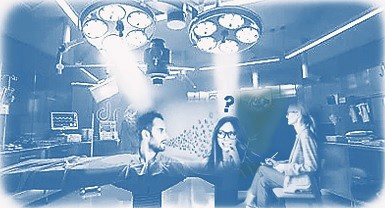
This book is about the history of human communication from long ago, to today’s infusive electronic surrogate. An undercurrent flows beneath a transit of communicational forces ranging from everyday exchange of ideas, emotions and thoughts, to the virtual domain of chat, intimacy, political sway and intelligence. Notably, such a pull is rapidly setting course down a lightning rod, with reconstruction costs to humans’ well-being on a shocking rise. This book will expound the many aspects of interpersonal communication (vocal, text, touch, sexual, virtual, and more), and ways people bond within a plethora of influences from humanity’s prehistoric roots up to present day. Not all electronic communication is bad and not all in-person communication is good. Balance is key though will require the aforesaid surgery and much post-op psychoanalysis (book cover).
Deific or evolutionary forces gave us the richest provision to interact within our diverse species, the most sophisticated means of any phylum. But the present machined world of AI, bots, computers, smartphones, cameras, gaming, and virtual reality is making humans fearful, awkward, isolated, and societally publicized. Therapy is today’s new buzz for mental appeasement, just as Tai Kwon Do classes became the country’s last resort to instill traditional discipline among kids. The kicker: communication has become instant, fleeting and impactful through a variety of means, and broader than ever (as is anyone’s identity) in its provision. Yet, it is increasingly waring on people psychologically and physically. Novocain to reduce the pain is also waring and contains litigious side-effects. Is there a fix to today’s interpersonal communication realms, and if so, what?
To that point, the universe miraculously summoned me to the authors’ operating room amid a freezing, outdoor, kung fu weapons workout (of all times), January 16, 2026, to answer that question. Today, January 17th, I have begun operating on what I feel is one of the most important procedures ever: an Interpersonal Communications Bypass. Kites without tales run amuck, as do humans going against their quintessential ability to interact under unhuman influencers. Is our espousal to communicate organically salvageable in relationships, families, occupations, politics, consciousness and non-verbal exchange? Find out the answer as my writing extensively examines this vital operative, and more. ChatGTP, go back to your room; you’re not welcome here.
Please enjoy this book and thank you for letting me share my innermost thoughts on this subject.
Targeted release: 2028